

Doors in healthcare environments can sometimes be an afterthought within the design process, but are in fact an object which is touched most frequently and used by everyone throughout a hospital. Selecting the right hospital doors is essential for hygiene, efficiency, fire safety, acoustics, aesthetics and air quality. This article examines the potential difficulties encountered when specifying doors in the modern healthcare environment and how to overcome them.
Hospitals provide a demanding and hostile environment within which a door is required to function. For the specifier, who will often require hundreds of different doors for many different purposes, selecting the correct product can seem a daunting task. The growing demands of hygiene legislation, increasing pressure on hospitals to ensure performance matches the demands of the environment, and a renewed focus on lifetime costs, mean there are now more elements to consider than ever before.
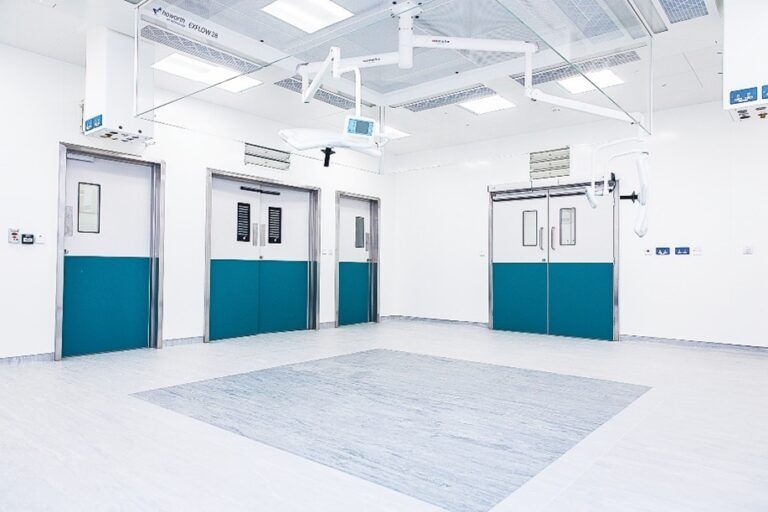
Mistakes
One of the most common mistakes made when selecting doors for installation in a hospital is specifying a particular system without thinking properly about its functionality.
For example, while two doors in the same hospital may both need to offer a one-hour fire rating, their operational use could be totally different. A one-hour fire rated door specified for a corridor area will not necessarily be suitable for use within an intensive care unit. However, recently steps have been taken regarding the implementation of design and the service life of doors in hospitals, and companies, who are specialists in the design, manufacture, and fitting of door products in the healthcare sector, can advise on the correct door type to suit the application.
Materials
One of the most important aspects of a successful infection control policy, beyond general hygiene, is choosing the correct materials for both the construction of the room and the components within it. Traditionally, some hospital doors are painted wooden or wooden cored laminate. However, because of increasing standards of hygiene and infection control, glass reinforced polyester (GRP) is becoming the material of choice for the modern hospital designer, not only for high-risk areas such as intensive care, pharmacy cleanrooms and operating theatres, but also for medium risk areas like recovery suites, laboratories and hydrotherapy pools.
GRP is a high technology engineering composite, manufactured from millions of strands of glass fibre and polyester resin. Doors are produced using a unique closed mould process, creating a strong, uniform product with no seams or joins on the door surface and no holes or crevices within. Unlike alternatives, colour is built into the door during the manufacturing process, and the outer skin has a gel coat finish that is chemically bonded to the glass fibre, ensuring that such doors will never require repainting or refinishing – avoiding costly shutdowns and maintenance throughout the door’s lifetime.
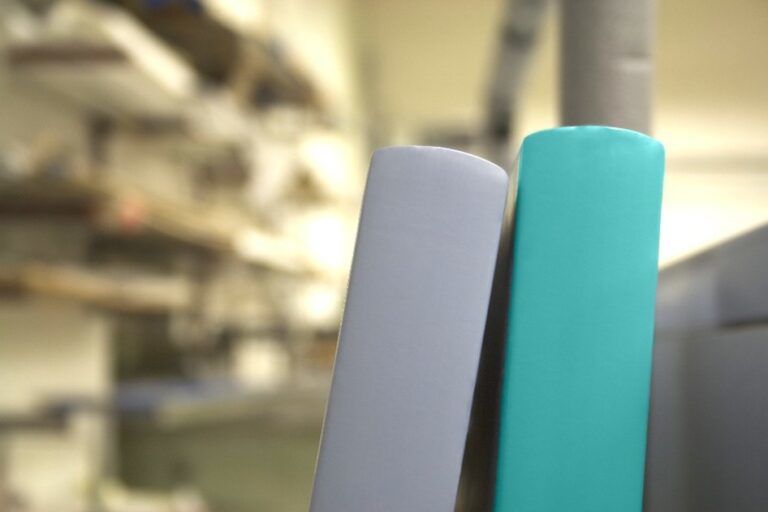
Organic Timber doors are not suitable for all areas
While timber or laminate doors may be adequate for non-critical areas such as corridors, waiting areas and general office space, in areas where cleanliness is of the utmost importance, organic materials are not suitable. No one would consider using organic materials to make trolleys, benches or operating tables, and yet we still see doors manufactured with timber.
When in use in areas such as operating theatres, doors can be subject to damage on a regular basis, with trolleys manoeuvred in confined spaces inevitably hitting both the door and its frame. Timber and laminate doors are not only weaker than GRP doors, and thus more easily damaged, but can also pose a higher risk, as a knock or chip may reveal organic materials below where bacteria could reproduce, as well as being virtually impossible both to clean and to keep clean effectively.
Hygiene
Hygiene is now regarded as the most important performance criteria in healthcare applications in the fight against hospital-acquired infections. Infection control guidance note HFN 30, “Infection control in the Built Environment” 2003, addresses infection control issues in design and planning, and states that: “If the burden of healthcare-associated infection is to be reduced, it is imperative that architects, designers and builders be partners with healthcare staff and infection control teams when planning new facilities or renovating older buildings”.
The guidance note calls for smooth, hard impervious surfaces which are easy to clean and durable. Ledges, recesses and right angles where dust particles can be trapped should, it says, be avoided to allow ease of cleaning. Alongside the clinical environment, another potential area where cleanliness is of key importance in preventing HAIs is within a hospital’s catering facility. Growing demands of hygiene legislation and increasing pressure on hospitals to provide better standards of catering are forcing many hospitals to reassess their kitchens and invest in new facilities.
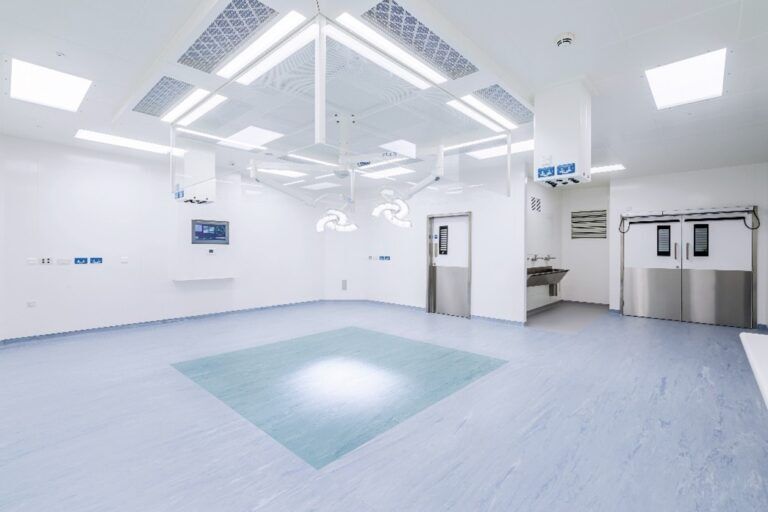
Studies show doors can harbour bacteria
In recent studies of hospital cleanliness, microbiologists have found that doors are a major area of bacteria collection and therefore need to be able to sustain regular cleaning.
Doors should be able to tolerate constant cleaning with a number of different chemicals, including prolonged use of disinfectants, chlorine-releasing agents and alcohol-impregnated wipes. Laminate and painted wooden doors are much more likely to deteriorate and flake once exposed to common cleaning regimes. This can lead to costly maintenance and deterioration, meaning that the doors have to be replaced after a short space of time. Ease of cleaning should also be taken into consideration when fitting hardware or door furnishings.
Lifetime costs
One of the prime concerns when building a hospital is lifetime costs. It is essential that the chosen solution should be manufactured on time, on budget and using materials which will require minimum maintenance over the years. Projects undertaken under a private finance Initiative have embraced this idea, with the bidder being asked to provide a summary cashflow of projected lifecycle expenditure on a year-by-year basis.
GRP offers significant benefits in durable energy efficiency and longevity due to its superior thermal insulation that reduces heating/cooling demands, and its high durability and resistance to corrosion, rot, and pests, which leads to a longer lifespan, fewer repairs, and lower maintenance energy costs. This extended life cycle, coupled with a more efficient manufacturing process and potential for recycling, contributes to a lower overall energy footprint and supports sustainable building practices.
Hospital design and alternatives
Chosen door systems should work with the room design. Sliding doors are becoming increasingly popular, both in new buildings and as replacements for existing hinged single and double action doors. A common misconception is that sliding doors are more expensive. They can, however, be more economical and, taking up less valuable floor space, they are ideal for small rooms and areas with narrow corridors.
Hermetic doors for air control
WHO guidelines for indoor air quality indicate that indoor air pollution plays a significant role in the general state of health of people who spend a considerable amount of time indoors. Hospitals and healthcare facilities, therefore, have a particular duty to protect patients, staff and visitors, from air pollution, bio particles and airborne infection.
Research by ASHRAE, the global society advancing human wellbeing through sustainable technology for the built environment, estimated that up to 20% of hospital infections may be attributed to airborne bacteria and viruses. The choice of doors in the hospital environment can play a vital role in improving patient healthcare and good air quality can assist in ensuring the psychological and physical wellbeing of inhabitants.
Hermetic sealing doors have a 99% airtight seal which helps to reduce cross contamination, wound infections and expensive air handling costs.
Automation
In many areas of hospitals, doors will be manually operated. However, there are cases where automation should be used to ensure operating efficiency as well as to protect the door itself and ensure it remains damage-free. Automated doors should be used in areas of high traffic flow and where individual members of staff may be passing through an area with equipment which must go through the door. They are also ideal for use in areas which require access control and where doors must not be held open. It is important to consider the positioning of the method of actuation, whether it be a push button, kick plate or touchless sensor, to maximise the benefits of automation.
Third party fire tested door sets
Specifying fire doors has become an increasingly complex task. Fire safety is a critical part of the construction process so it’s essential that the appropriate fire door is selected and expertly installed.
The selection and installation of a fire resisting door set which is fire tested and proven compliant by a third party UKAS approved/TUV laboratory is not only incredibly important, its mandatory. A fire door is much more than just a door leaf. The door leaf, the frame, the hinges, the fittings, the hardware, the glass in the vision panels and the seals are all dependent upon each other, to ensure the effectiveness of the door in a fire. The full door assembly must be fire tested as a combination of all elements together, rather than each component individually.
Using doors that have third party fire tested proven compliance also gives specifiers confidence that a product is fit for purpose and is manufactured using a clear quality system. In addition, the specifier will have guaranteed third party fire test documentation that proves the fire performance has been independently verified, which is important for installers, inspectors and clients to ensure the relevant standards have been met.
Modern methods of Construction
As manufacturers and architects look for more sustainable designs for improved environmental impact, modular construction is a good fit. Building in a factory-controlled environment reduces waste and onsite disturbance. Each stage is carefully planned and most of the waste produced is either recycled or re-used once again in the manufacturing process. It also reduces onsite traffic thereby improving overall safety and security.
A Modular door has the hardware integrated with the door and installed at the factory which dramatically reduces onsite disruption, labour time and installation costs. It also reduces the probability of issues such as improperly installed hardware or hardware compatibility.
A modular fire door is not only tested on specifics of the door component, but also as a complete unit. This provides a more accurate and reliable fire door system. Modular fire door systems also include seals around the door’s edges to keep smoke out; this removes the need to manually fit seals onsite.
In addition to this, it saves the installers the inconvenience of arriving onsite to find incorrect parts which can cause further delays. It also eliminates the need to worry about parts arriving at separate times or being misplaced onsite. With Modular doors, frames can be included with an order which saves the time and hassle of needing to specify frames for each door.
Making the right choice
In conclusion, when specifying a door system, considering the following points will not only contribute to the cleanliness of the working environment, but will also ensure operating efficiency and a long, trouble-free lifespan for your door-sets:
- Hygienic performance
- Timber-free, Inorganic materials
- Fire rating
- Lifecycle costs
- Air control
- Modular construction
- Benefits of sliding over hinged doors in certain environments
- Smoke and fire regulations
- Strength, durability and protection requirements
- Sound insulation
- Security
- Accessibility
- Colour and contrast.
Find out more about our healthcare doors here – Healthcare Doors | Hospital Doors | Dortek
Link to article on Building Better Healthcare – Specifying doors for hygiene and efficiency in modern healthcare environments
www.dortek.com /info@dortek.com


