
Accessibility and inclusion are no longer secondary considerations in public-space design. They are measures of quality. For landscape architects, architects, and asset owners, the focus has shifted from basic compliance to whether a space delivers genuine usability, dignity, and long-term performance.
Communal barbecue facilities provide one of the clearest tests of inclusive design. Unlike paths, seating, or shelters, a barbecue is an active electronic appliance. It introduces heat, controls, reach ranges, and safety clearances into a shared public setting. When these elements are poorly resolved, access is not merely reduced; it is effectively removed. Exclusion is rarely intentional. It results from design decisions that fail to account for how people with different abilities use public infrastructure in practice.
Public barbecues sit at the intersection of social function, safety, and durability. They are high-use assets designed to invite participation from people of all ages and abilities. When accessibility is treated as a late-stage adjustment, facilities may technically comply while underperforming in everyday use.
Inclusive design requires accessibility to be addressed at the concept stage. This means designing for seated users, people using mobility aids, families with children, and shared-use conditions as part of the primary brief, not as exceptions.
Accessibility in Christie Barbecues
At Christie Barbecues, accessibility is embedded in the product design rather than added to satisfy regulatory requirements. Cabinet geometry and cooktop layouts are developed to support comfortable reach and operation for seated users. Controls and warning indicators are positioned above the benchtop to remain visible for both seated and standing users.
Clearances around the barbecue are treated as functional space, not residual area. Adequate room for approach, turning, and use supports independent access for wheelchair users and aligns with Australian requirements for continuous access paths and multidirectional movement. These dimensions are resolved to support practical use, not just minimum compliance.
Safety is integrated into the cabinet form. Raised edges and protective detailing reduce accidental contact with hot surfaces, particularly for children, while maintaining clear access for adult users. Risk is managed through considered detailing rather than restrictive barriers.
These principles are applied consistently across Christie’s A-Series and ICON cabinets and their cooktops, allowing designers to specify accessible solutions without compromising performance, durability, or visual coherence. Inclusive use is treated as a baseline condition.
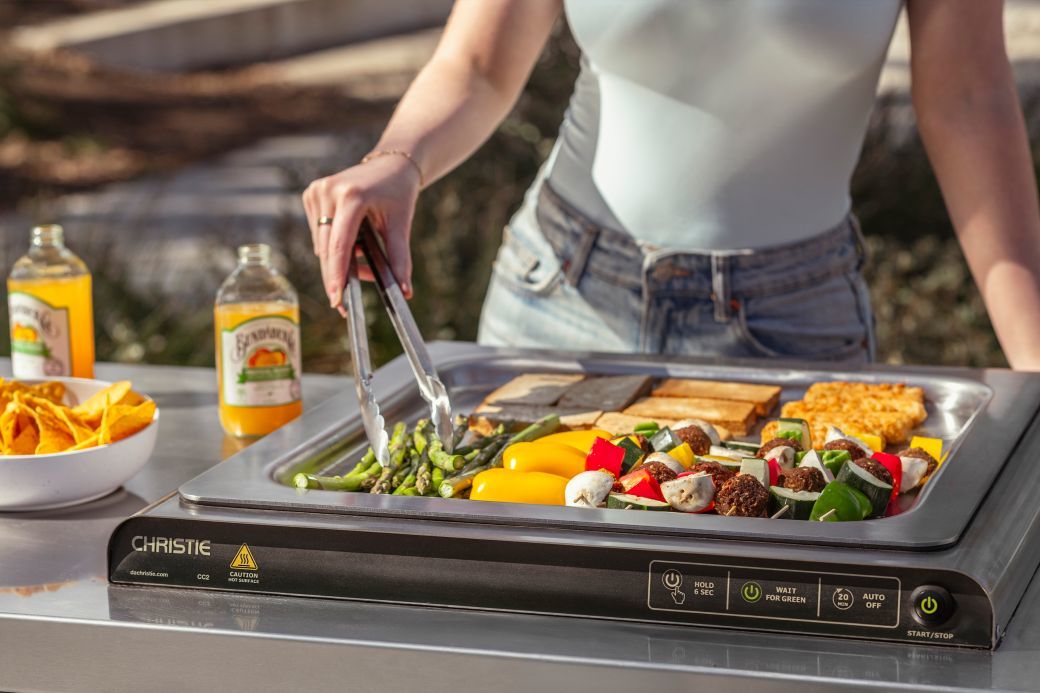
Image Caption: A Close-up view showcases the user-firendly interface and robust stainless steel construction of the CC2 cooktop
The Surrounding Environment
The performance of an accessible barbecue depends on more than the unit itself. The surrounding environment is critical to achieving functional access. Pathways must provide clear, continuous access in accordance with national guidelines. Where changes in level are unavoidable, ramp gradients must support independent movement, with 1:14 generally accepted as the maximum slope. Surfaces around cooking areas should be slip-resistant, and circulation zones must be kept clear to prevent grease buildup, debris, and trip hazards.
Associated amenities, including seating, picnic settings, shade, and waste disposal, must also be accessible to enable full participation. Accessibility is not achieved through proximity alone, but through independent and dignified use.
Designing Beyond Minimum Standards
Australian accessibility standards provide a necessary baseline but do not fully address the realities of high-use public environments. Christie Barbecues designs all its products to exceed minimum requirements, recognising that real-world use places greater demands on space, visibility, and durability than compliance diagrams suggest.
Clearances that meet minimum dimensions but feel constrained can limit usability. Controls that comply dimensionally but lack visibility or intuitive operation undermine functional access. Designing beyond the minimum reduces the likelihood of future complaints, retrofits, or asset modifications, delivering stronger long-term outcomes for both communities and asset owners.
Accessibility is only effective if it is maintained. Facilities that are poorly serviced quickly become inaccessible, regardless of their original design intent. Regular inspection, clear safety signage, and timely servicing are essential to maintaining inclusive operation. Christie supports this with in-house technical expertise and readily available spare parts, ensuring that accessibility and safety features remain effective throughout the asset's life.
A facility that meets access requirements but is frequently out of service fails to deliver inclusive outcomes. Reliability is a core component of accessibility.

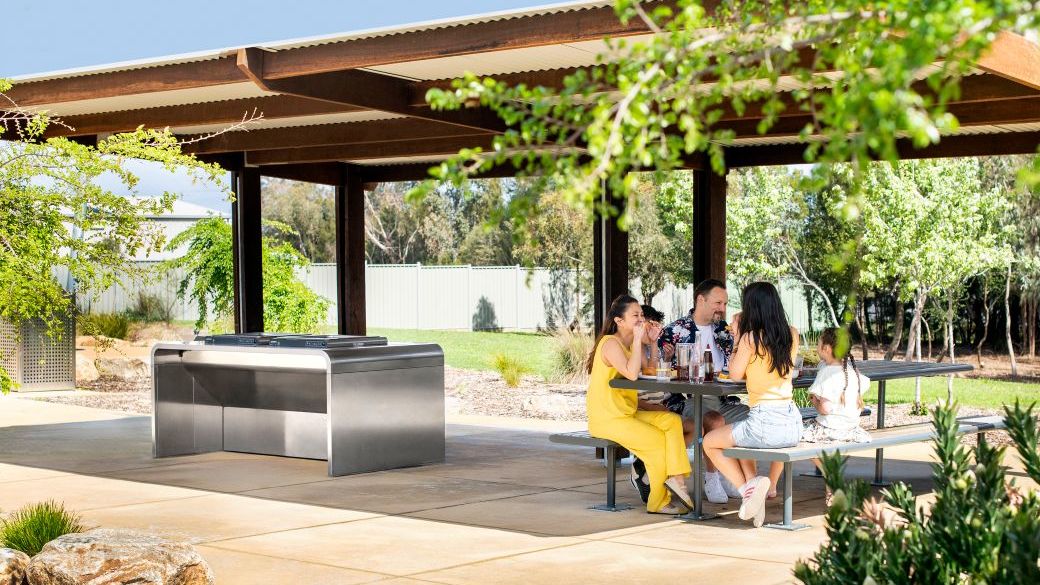
Image Caption: A communal public space featuring accessible Christie ICON Barbacue Cabinet, demonstrating how inclusive design fosters social interaction and participation for people of all abilities
Designing for Enduring Use
Inclusive public spaces reflect the priorities embedded in their design. While modest in scale, barbecue facilities play a significant role in social interaction within public landscapes and deserve the same design rigour as other civic infrastructure.
Christie Barbecues demonstrates that accessibility can be achieved without compromising safety, durability, or performance. Through considered engineering and a clear focus on real-world use, public barbecues can support broader participation and deliver enduring value.
As expectations of public infrastructure continue to rise, accessibility by design is no longer aspirational. It is the benchmark for quality.
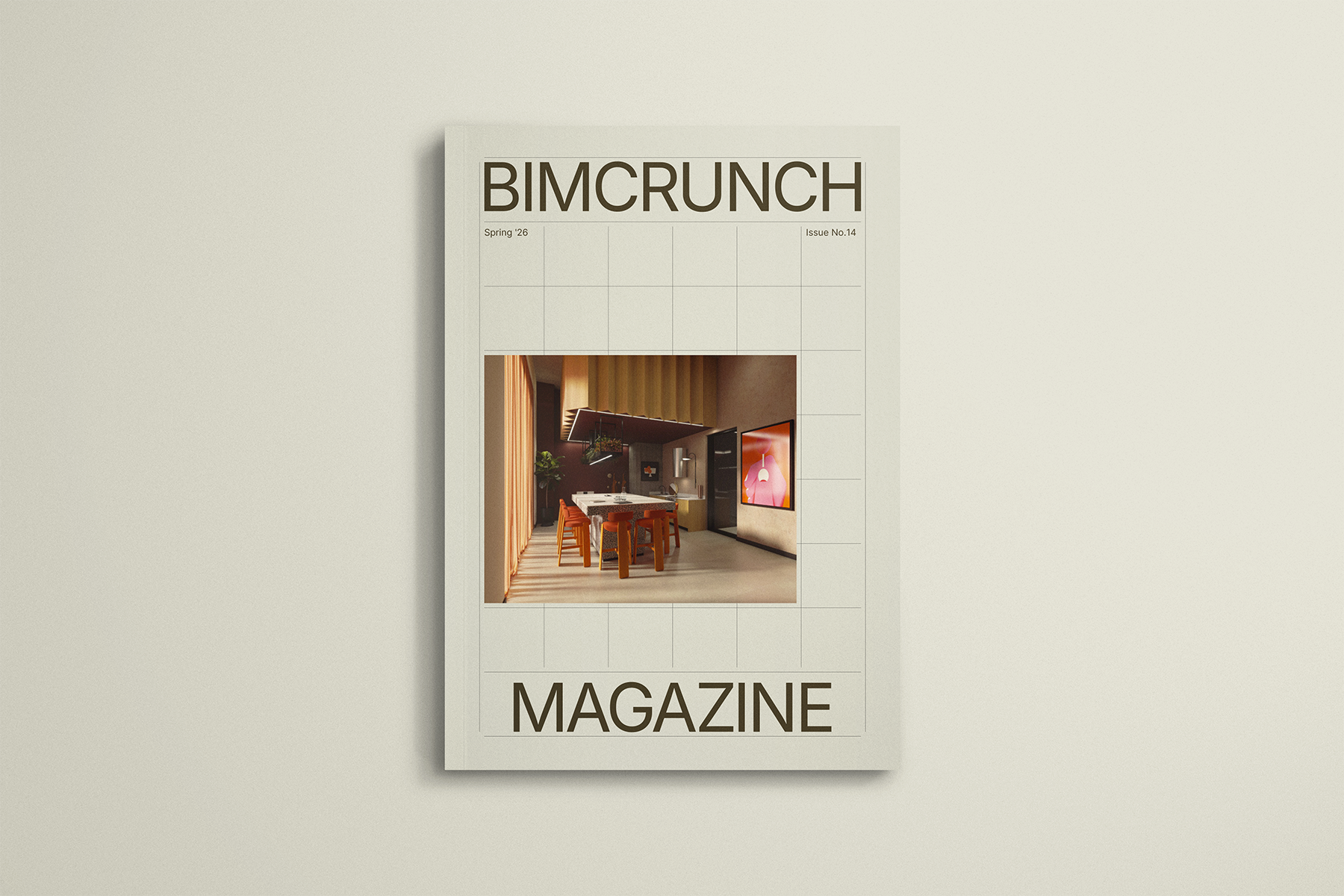
This article was featured in the Spring '26 edition of BIMCRUNCH. Find the full magazine here. To learn more about Christie Barbecue or download their BIM objects, join Bimstore for free. For additional information, visit the Christie Barbecue manufacturer profile or their company website and social media pages.


Magazine
BIMCRUNCH Spring '26 is here: read our new edition today!
This Spring Edition of BIMCRUNCH celebrates a new way of thinking across the built environment, reflecting trends in material innovation, building safety compliance, and low-carbon heating systems. This edition features insights from leading UK and Australian manufacturers, alongside feature articles on digital workflows and smart modelling. We also close the first quarter with the exciting news that Bimstore's parent company has been recertified as a B Corp organisation.